e-Training for Dogs

Online Dog Training Class | Puppy Dog Training Online | Search and Rescue Dog Training

  • Home
  • About
    • History of e-Training
    • Faculty
    • Guest Lecturers
    • Students
  • Online Learning
    • For the Dog Professional
      • Canine Professional Programs
      • Individual Courses for Professionals A-Z
      • Individual Courses for Professionals-By Interest
      • Lecture Series
        • Ethology and Canine Behavior Lecture Series
        • Service Dog Training Lecture Series
      • CCPDT CEU Approved Courses
      • IAABC CEU Approved Courses
      • NADOI Accredited Courses for CEUs
    • For the Dog Enthusiast
      • Individual Courses A to Z for the Dog Enthusiast
      • Individual Courses by Interest for the Dog Enthusiast
    • Pet-Sitting Courses
    • Animal Wellness and Animal Hospice
    • Veterinary Professional Courses
    • Equine Enthusiasts Online Courses
  • FAQ
  • Blog
  • Contact
  • Links
You are here: Home / Archives for Service Dog Training

Working with Service Dog Owner-Trainers: It’s Not About the Dog

August 16, 2018 By Cheryl Aguiar |

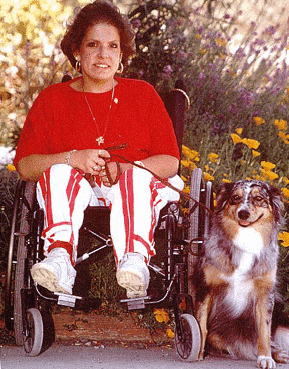
Working with service dog owner-trainersWorking with Service Dog Owner-Trainers – Clients

Are you getting calls from clients asking for help training their own service dog? Are you wondering whether to take these cases or refer them out? Working with service dog owner-trainers can be both challenging and rewarding.

From the initial inquiry, to consults, lessons, and a long-term training relationship, working with service dog owner trainers (OTs) can have significant differences from working with pet dog clients. Quite apart from dog-training expertise, OT cases may require us to navigate tricky legal, business, human health, psychological, and community considerations. Pet dog trainers may find this work rewarding, challenging, overwhelming, confusing, or distasteful. Trainers who take on service dog clients without adequate preparation may cause unintentional psychological or physical harm to the client team or damage to their business. This presentation will address some of these differences and help you decide whether this work appeals to you.

Speaker: Sharon Wachsler, CPDT-KA, KPA-CTP  and Barbara Handelman, M.Ed., LCMHC, CDBC, (Moderator)

Access to the recording is for 32 days.

This presentation will address trainer questions such as:

  • Should I offer pre-adoption consulting and assessment to help clients find candidate dogs?
  • How do high levels of chronic stress/distress in the client’s life affect the dog-client-trainer relationship and approach?
  • Should I modify lesson, package, and billing structure to provide OTs additional support?
  • How do SDiT training standards differ from pet standards in terms of choosing behaviors or level of handler skill or reliability?
  • How familiar and comfortable do I need to be with mental and physical disabilities? What is disability culture and etiquette? How do I help clients choose assistance tasks?
  • Am I ready to cope with more “high-maintenance” clients? Am I prepared to set up progress meetings, meetings with client’s healthcare providers, or offer support between lessons and work with clients on a weekly basis for years?
  • How should I adapt training equipment and methodologies for the handler’s disabilities?
  • How should I prepare to address topics like career change (“washout”), rehoming, and/or retirement?

We’ll also address common trainer questions such as:

  • How do you know if the client is truly disabled and needs a service dog?
  • How do you proceed when the dog needs training but is an inappropriate SDiT prospect?
  • Is there a way to work with clients whose physical or mental disabilities pose barriers to your usual training instructions or methods?
  • When and how to turn away a client or refer them to another trainer?

By the end of this workshop, participants will have a better sense of what working with service-dog owner-trainers may require of them, whether they are interested in delving into this specialty, and if so, how to choose which cases to take, and how to refer cases that are not a good fit.

Cost: $25.00 USD

CEU’s Available:
2 IAABC CEU’s
2 CCPDT CEU’s
2 ABCDT-L2 CEU’s
2 NADOI CEU’s
2 PPAB/PPG
Filed Under: Service Dog Training, Service Dog Training Course |

Jennifer Cattet, PhD

April 10, 2018 By Cheryl Aguiar |

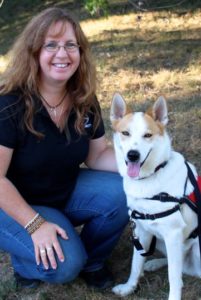
Jennifer Cattet, PhD, has been training dogs professionally since 1984. Her career as a dog trainer started with traditional training techniques, which were the only methods available at the time. Frustrated and concerned with the effects such methods had on some of the dogs and on their relationship with their owners, she went back to college and studied Psychology and Ethology (animal behavior) at the University of Geneva, Switzerland (she spent most of her early years in France). After her bachelor’s degree, she worked as the Assistant Professor in the Ethology Department and completed her studies with a doctorate on spatial navigation in dogs.

As more positive, science-based methods were gradually coming forth, Jennifer started the first professional dog-training company promoting the use of clicker training in France in 2001.

Back in the US, Jennifer Cattet has since specialized in the training of service dogs since 2008, a specialty that combines her knowledge of both animal and human psychology. As Director of Training for a prison-based organization in Indianapolis, she oversaw the training of dogs for mobility and autism. During that time, she also developed a training program for diabetes alert dogs and collaborated with a team from Eli Lilly, in the first study proving the ability of dogs to detect hypoglycemia samples through smell.

Since 2013, Jennifer Cattet and her husband Jack Topham have operated Medical Mutts, an Indiana-based company, dedicated to the training of rescue dogs as service dogs. Medical Mutts specializes in the training of dogs for diabetes as well as epileptic seizures, psychiatric and other medical conditions. Their team is also involved in research on diabetes and prostate cancer detection.

Jennifer still spends time in France, where she consults and teaches service dog organizations in the training of dogs for diabetes and seizures.

Webinar: Selecting and Training Diabetes Alert Dogs

Filed Under: Guest Lecturers, Service Dog Training |

Selecting and Training Guide Dogs for the Blind

March 21, 2018 By Cheryl Aguiar |

Service Dog Training Lecture Series – Selecting and Training Guide Dogs for the Blind

This webinar on selecting and training guide dogs for the blind will provide an overview of the specific characteristics desired in a working guide dog (physical and temperamentally).   The presentation will also describe the unique training skills a guide dog receives, as they differ from other service work behaviors.  Also included will be the changes in training methods since 2005 (from traditional to positive reinforcement).

Speaker: Michele Pouliot 

Learning Objectives:

Participants will become familiar with the following:

  • How the physical and temperamental characteristics of working guide dogs differ from those of other types of service animals.
  • The ways in which guide dog skills are specialized and differ from the skills and tasks that are taught to most other service dogs working with disabled handlers.
  • The history of guide dogs, and how that history is relevant to the evolution of current training methods.
  • Know some of the historical importance of guide dogs.
    • Acceptance of working dogs in the community and public access rights for people with disabilities and their service dogs – began with guide dogs.
    • Guide dogs first came into being during and after World War I, in Germany.
    • The first guide dog school in the United States opened in 1929 with several other schools opening in the 1950’s.
    • The first guide dog team in the USA was Buddy and Morris Frank.
  • Modern guide dog work and the requirements in an effective guide dog have transformed dramatically to adjust to cultural changes.
  • Community culture and environment greatly impact how a guide dog is developed and trained.

Access to the recording is for 32 days.

Cost: $25.00 USD

CEU’s Available:
2 IAABC CEU’s
2 CCPDT CEU’s (1 CBCC-KA)
2 ABCDT-L2 CEU’s
2 NADOI CEU’s
2 PPAB/PPG

Speaker: Michele Pouliot worked 42 years as a professional guide dog trainer for the largest guide dog school in North America. Before entering the guide dog field, she studied under Linda Tellington Jones and Wentworth Jones at The Pacific Coast Equestrian Research Center, working for them after graduating with honors. In 1972, Michele acquired her first dog, sparking her interest in dog training.  Michele discovered Clicker Training in 2000 and has never looked back. Michele has been responsible for promoting science based Clicker Training to the international guide dog field. Michele actively assists and consults guide and service dog programs around the world in adopting positive reinforcement techniques. In addition, Michele has successfully competed in horse and dog sports since 1970, having competed in extensively in Competitive Obedience, Agility and, Canine Musical Freestyle. Over 18 years in competitive obedience, she gained 3 OTCH titles on her Labradors and numerous titles on clients’ dogs.

Since 2006, Michele has been involved in the sport of canine musical freestyle. She thoroughly enjoys the creative challenge in this artistic sport that combines precision movements with trick behaviors to music. Michele has won 5 international competitions and attained 8 Championship Titles with 3 canine partners. In 2008, Michele made freestyle history in the World Canine Freestyle Organization when she received perfect scores of double 10’s for Technical and Artistic in a performance. Michele repeated this remarkable accomplishment with her celebrated Australian Shepherd “Listo” an incredible 24 times. Currently, Michele is performing with her English Springer Spaniel “Déjà vu” and her Australian Shepherd “Saké”. Since 2007, Michele has been an admired member of Karen Pryor’s faculty for Clicker Expo Conferences, presenting at all Clicker Expos in the USA and Europe. Michele’s enthusiasm in teaching effective clicker training is infectious and she has a remarkable amount of hands on experience (over 45 years) to draw upon.  Michele is sought after for seminars and workshops due to her clarity of instruction, incredible training skills, along with her entertaining presentation style. Michele’s website:  michelepouliot.com

Filed Under: Service Dog Training |

Service Dog Training Lecture Series

December 6, 2017 By Cheryl Aguiar |

service dog trainingThe Service Dog Training Lecture Series is offered for professional service dog trainers; owner trainers; service dog partners; pet dog trainers endeavoring to become service dog trainers; and anyone else with an interest in service dog training.  This lecture series provides participants an opportunity to sample the expertise of a diverse selection of highly acclaimed trainers in the field of service dog training.

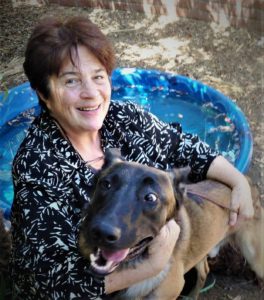
Barbara Handelman M.Ed., CDBC, the series’ moderator, is now offering an in-depth, comprehensive course curriculum about service dog training: Barbara Handelman Service Dog Training Course (BHSDT). All the lectures from this series are woven into the curriculum for the BHSDT offered by www.e-trainingfordogs.com.

Speaker: Dee Ganley CPDT CABC CAP 2 CBCC
Title: Self-Control Exercises for Service Dog Candidates

Speaker: Jeanne Hampl
Title: Public Access Behaviors and Service Dog Ethics

Speaker: Patty Dobbs Gross and Daniel Gross
Title: Selecting and Training Service Dogs for Children

Speaker: Michele Pouliot
Title: Selecting and Training Guide Dogs for the Blind

Speaker: Jennifer Cattet, PhD
Title: Selecting and Training Diabetes Alert Dogs

Speaker: Cissy Stamm and Barbara Handelman, M.Ed., LCMHC, CDBC
Title: Selecting and Training Service Dogs for Mental Health Disabilities-Part I

Speaker: Cissy Stamm and Barbara Handelman, M.Ed., LCMHC, CDBC
Title: Selecting and Training Service Dogs for Mental Health Disabilities-Part II

Speaker: Jeanne Hampl
Title: When to Say When – Identifying Stress Responses in Service Dogs, Indications for Early Retirement of Working Dogs or Dropping Young Dogs from Candidacy to Become Service Dogs

Speaker: Sharon Wachsler CPDT-KA, KPA-CTP
Title: It’s Not about the Dog! The Client Side of Working with Service Dog Owner-Trainers

Cost: $25.00 USD per lecture 

Purchase of all nine lectures is $190.00

CEUs available: 2 each for IAABC, CCPDT, NADOI, IACP and PPG/PPAB

Filed Under: Service Dog Training |

Martha Hoffman, BA

November 30, 2011 By Cheryl Aguiar |

Martha Hoffman, BA in Biology, University of California at Santa Cruz. Having pined for a dog during her whole childhood, Martha Hoffman finally got a Yorkie in 1979. She enjoyed teaching her Yorkie every trick she had ever heard about. Martha has been moderately hard of hearing from birth, and uses hearing aids. She had learned of a brand new concept called a “Hearing Dog.” Noticing her dog barking when the phone rang, she tried many ways to teach him to do other alerts. Although she later learned that there were better alerts than barking, Martha soon realized how even normal behaviors of a pet dog can provide a feeling of security in knowing about sounds and situations in and out of the home. As she aged, and lost more hearing, she realized more ways in which a Hearing Dog can be of help. Adding formal sound alerts is an incredible bonus for any Deaf or hard-of-hearing person who loves dogs.

She later landed her dream job: trainer at the Hearing Dog Program in San Francisco, working there for 30 years. She has been involved with the selection, training and placement of over 500 Hearing Dogs and Service Dogs, as well as evaluating and instructing their human partners.

Martha has temperament tested over 20,000 dogs for suitability for this work, and observed the behavior of over 200,000 shelter dogs and puppies. Martha’s book “Lend Me An Ear” received excellent reviews and is considered to be the textbook for understanding Hearing Dog temperament, training, and selection. The temperament testing section applies to Service Dog and pet dog testing as well.

During her time at the Hearing Dog Program, she and the other HDP trainers revolutionized training methods to help dogs gain a conceptual understanding of sound alerting, instead of relying on training complex behavior chains. Dogs trained with these methods continually expanded the dogs’ abilities to alert to new sounds and situations.

Working in a training program has challenges, including funding and high demand for trained dogs. Innovative trainers taught several behaviors at one time, or taught whole concepts. Both led to great improvements in the training process. Another challenge was to teach people to succeed with their new dog. Many clients were people who adored dogs, but perhaps had never owned or trained a dog, perhaps knew English as a second language, perhaps were very elderly, perhaps had learning challenges. One intensive class week had to get them ready to keep up the training, as well as understand how to train any new sounds at home with their new dog, on their own. However, complex training sequences and concepts are not easily transferred. Martha developed illustrations, demonstrations, and techniques to fit many client learning styles.

The graduates also had to be taught how to teach people! They needed to be able to go home and train their families, as well as their new dog! Martha and the trainers invented games and strategies that turned jealous or unmotivated kids and spouses into proud training assistants. Martha successfully tested her people-teaching techniques and dog-training games on the children at the SF-SPCA summer day-camps.

Another result of working for the HDP was that Martha discovered that teaching people was just as rewarding as training dogs. She started as a shy, introverted dog-lover who was obsessively curious about the mysteries of dog behavior. She became a dog trainer whose mission is to find better

ways to teach people to understand dog behavior and training. She enjoys learning from her online students and helping them achieve their goals. Martha has trained her own Hearing Dogs and pet dogs to excel in Service Dog tasks, Hearing Dog alerts, tracking, film, stage, tricks, cancer detection, bedbug detection, herding, and diabetic alerting. She and her pet Belgian Malinois “Jekyll” made US Schutzhund/DVG/IPO teams five times to compete in World Championships in Europe. She has enjoyed competing in AKC Obedience, and her Border Collie Hearing Dog “Jinx” gained Agility titles including winning the overall 1990 USDAA national championship. Martha helped found a Diabetic Alert Dog program, taught at the Bergin University for Canine Studies. She has also given seminars worldwide, and taught online extensively.

Martha is always on the hunt for more information on the expanding field of medical alerting for Service Dogs. Her next goal is to combine her techniques for sound and “Go Get Help” alerting with medical scent/symptom alert training.

Martha teaches the Soundwork courses and co-teaches tiers 1 and 2 of the: Barbara Handelman Service Dog Trainer program.

Martha currently lives on the island of Bali. She enjoys her housemate’s three Pugs, and sees great Hearing Dog potential in one of them!

Filed Under: Faculty, Service Dog Training |

  • « Previous Page
  • 1
  • 2
  • 3

Search this site:

SIgn up for our Newsletter

Sign up for our newsletter: Sign up for our newsletter

Follow Us

  • Facebook
  • LinkedIn
  • RSS
  • Twitter
  • YouTube

Link to Discounted Courses for Professionals

Link to Discounted Courses for Professionals

Link to Classroom For Current Students

Link to classroom: Student Classroom Link This link will work for current and registered students ONLY.

Lecture Series

Seeing Through a Dog's Nose-Canine Nose Lecture Series ALSO, Please check out our ethology and canine behavior lecture series, over 100 lectures Ethology and Canine Behavior Lecture Library Also available is our lecture series: Service Dog Training Lecture Series

What is E-Training for Dogs and how does it work?

What’s NEW?

CPDT-KA Attestation Form online signature

Training the Retrieve

Emotional and environmental enrichment with scent

Backing and Pivoting

The Science of Olfactory Perception and Learning

Pay Later Now Available

What’s NEW?

CPDT-KA Attestation Form online signature

Training the Retrieve

Emotional and environmental enrichment with scent

Backing and Pivoting

The Science of Olfactory Perception and Learning

Copyright © 2026 e-Training for Dogs | Privacy Policy