e-Training for Dogs

Online Dog Training Class | Puppy Dog Training Online | Search and Rescue Dog Training

  • Home
  • About
    • History of e-Training
    • Faculty
    • Guest Lecturers
    • Students
  • Online Learning
    • For the Dog Professional
      • Canine Professional Programs
      • Individual Courses for Professionals A-Z
      • Individual Courses for Professionals-By Interest
      • Lecture Series
        • Ethology and Canine Behavior Lecture Series
        • Service Dog Training Lecture Series
      • CCPDT CEU Approved Courses
      • IAABC CEU Approved Courses
      • NADOI Accredited Courses for CEUs
    • For the Dog Enthusiast
      • Individual Courses A to Z for the Dog Enthusiast
      • Individual Courses by Interest for the Dog Enthusiast
    • Pet-Sitting Courses
    • Animal Wellness and Animal Hospice
    • Veterinary Professional Courses
    • Equine Enthusiasts Online Courses
  • FAQ
  • Blog
  • Contact
  • Links
You are here: Home / Blog

How Does a Puppy Develop?

February 16, 2013 By Cheryl Aguiar |

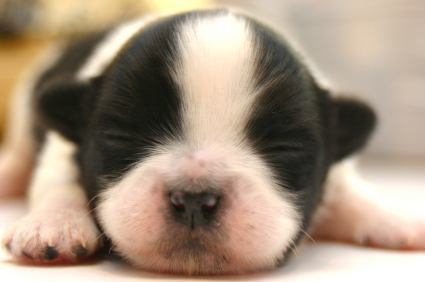
NewbornPuppy


Education on the development of a dog from conception to adult must be covered genetically, physiologically, biologically, mentally, emotionally and environmentally. Having all of the right factors in place gives each dog the best chance at a healthy and happy life with humans.


At E-Training for Dogs, we have several FASCINATING courses for those interested in canine development:
Introduction to Breeding and Whelping
Puppy Imprinting and Bonding
Dog Orgin and Early History
Canine Biology and Behaviour-Part I
Imprinting and Handling Puppies Birth to 10 Weeks-Webinar

Our upcoming courses are:
Canine Biology and Behavior-Part II
Canine Biology and Behavior-Part III
Introduction to Genetics

Watch for these. Sign up for our Newsletter to be the first to hear about these!

The Pet365 Blog, a wonderful blog on all things pets, has put together a fascinating graphic story of dog development from embryo to end of life. Enjoy!
Puppy Development
Puppy Development graphic created by Matt Beswick for Pet365. Click here to view the full post.

Filed Under: Blog |

Education and Research Sanctuary-The Dingo Discovery Center in Australia

February 3, 2013 By Cheryl Aguiar |

I just discovered a canine research center that focuses on Dingeos. (Yes, the “e” is correct when talking about more than one Dingo.) The Dingo Discovery Research Center in Australia, a sanctuary and educational center for the Dingo. Not that it is a new Center, it has been around since 1990, but it was new to me and I was so impressed that I wanted to share it with you.

Our guest lecturer this month, February, 2013 is Dr. Bradley Smith. He is a researcher from the University of South Australia. He did much of his research with Dingoes at the Dingo Discovery Center sanctuary near Melbourne, Australia.

The sanctuary was established in 1990 by two veterans of the dog show world, Peter and Lyn Watson. These founders were resolved to preserve the now almost extinct in the wild gene pool of the Australian alpine variety of dingo. Since then, the sanctuary has been a source for positive media coverage, education of the public and a population of Dingoes available for non-invasive research studies.

Our speaker this month, Dr. Bradley Smith, through a series of experimental studies has documented the Dingo using tools. This finding has been bringing researchers from around the world to elaborate on his studies.

One popular hypothesis as to the origin of the Dingo is as a descendant of dogs brought by early colonists…gone wild. This is not true. The Dingo is more like the Australian wolf.  The Dingo existed in Australia long before any settlers brought dogs there and had been occasionally “tamed”, much as the North American Gray Wolf, by socializing young puppies.

To learn more about this fascinating canine, its past, present and future place on this planet, join us and sign up for the webinar:

Dingoes, the ‘missing link’ between wolves and domestic dogs?

When: LIVE online from Australia, February 6, 7:00-8:30 PM EST (10:00 PM GMT)
Available as a recording also!

IAABC and CCPDT CEU’s available

Go HERE to learn more and to register.


Filed Under: Blog |

The Amazing Canine Nose

January 11, 2013 By Cheryl Aguiar |


The dog’s nose is one of the most refined scent organs in the world. There are approximately 1200 separately identified chemical odorants. Of these, the average human can detect about 35%, but most dogs can detect and track over 90%. That’s over 1000 individual odors!

Given this amazing skill, it’s no surprise that a host of canine sports have developed utilizing the nose. Tracking and earth dog were just the start. Now there’s Canine Scent Work! This low impact sport allows dogs of all ages, breeds, physical condition, and social skills to develop confidence, refine their nose, and most importantly, have fun!

Teaching Canine Scent Work is a six part course that teaches students how to help dog and handler build communication and shape this natural talent into a honed skill. Basic biology, physics of scent, and cultivation of drive and search skills are all discussed.

New Course:  Teaching Canine Scent Work

Purpose: To provide the basic tools, concepts, and skills to successfully run a canine scent work class, up to and including pairing scent. Students will also learn how to work their own dogs as part of the process. This course runs 6 weeks.

What you can expect to learn from this Course:

  • Basic physiology of the canine nose and how “hunting” effects the canine body
  • Basic physics of air flow and how it helps dogs determine the location of source
  • General terminology used in Canine Scent Work (nose work)
  • Reading the dog’s “tells”
  • How to build drive
  • Structure of classes
  • Pairing  odor
  • Beyond the classroom

Instructor: Shelly Volsche, CPDT-KA

Course Length: 6 one-hour sessions

Course Cost – 

For Credit: $185.00
For Audit: $85.00


Filed Under: Blog |

Preventing Injuries and Maintaining Fitness in Dogs

December 26, 2012 By Cheryl Aguiar |

Guest Blogger-Racine Hyatt, CCM

There are no coincidences – this I know for sure.  The year was 1991 – I was involved in a car accident that would put in motion a series of events which would not only change my life, it would lead to what would become my BEST life!

Unable to return to school and the work I was doing due to the brain injury the accident caused, I found myself applying for and getting a job in a veterinary hospital as the secretary/receptionist.  After working there for two years a young female Boxer was surrendered to the clinic (the people that owned her didn’t see the sense of investing in the life-saving surgeries she needed).  One look into her deep brown eyes not only introduced me to my dog; I was prepared to do whatever she needed for as long as she needed it.  We would recover together.  The vet assured me that nothing she was enduring would haunt her later on, so we began our long and arduous journey back to life!

She introduced me to the world of dog sport competition to rebuild her confidence and complimentary practitioners who, combined with conventional medicine resulted in a recovery many thought miraculous.

It was one of her chiropractors who introduced me to equine rehabilitation / then the new school she had heard about in Florida for canine rehabilitation and after completing studies there I went on to graduate from the Treetops massage program, and the rest (as they say) is history!

And now, through this webinar, I have an opportunity to share some of the information which has evolved out of the development of Canine Sports medicine, rehabilitation, fitness and wellness with so many more people than I ever imagined!

In the early 90’s very few people gave any thought to fitness conditioning – the assumption was that training was exercise and the dogs were “fit enough”.

Then came sprains and strains / the explosion of knee surgeries / early onset dysplasia / career ending disc injuries and the worst of all – cervical spinal compression and whiplash!

Either dogs were breaking down as a species or, as we were asking our dogs to do more, we were not providing them with more!  My Meisha retired from a variety of activities (including IPO) injury free at the age of 10!  When asked how she remained so healthy all I could think of was that we followed the few basic rules of fitness (from gym class) – warm up, cool down and exercise to compliment the stresses of training/competition!  Equine athletes have been doing this for years – why not dogs?

My primary focus was to educate those competing in dog sport – so I put together seminars to address canine fitness from the beginning:  Raising a Canine Athlete – Puppy Development, to the All-Fit program for overall fitness and finally, How to Condition a winning Performance Dog.  For many, these seminars have provided the missing link to their training regimes!

It is important that anyone living with active dogs have a basic knowledge of some key aspects of canine anatomy to understand how injuries can happen in order to prevent them – for example, the dangers of inappropriate exercise for puppies (under 18 months) while over 700+ growth plates are developing the structure upon which they will rely for their entire lives!  These micro-injuries are the precursors to dysplasia, spinal conditions, soft tissue damage – all preventable!!

Canine shoulder structure – or should we say lack of it!!  It is inconceivable that this bungled engineering can support dogs at all – and the main reason why education became so important to me!

The consequences of malnutrition created by the commercial dog food industry…specific changes in lifestyle for senior dogs to age with vitality…and simple exercises incorporated into your daily leash walk that will optimize this time you spend with your dog improving flexibility, strength and endurance to enhance and maintain healthy muscles!

I look forward to spending the hour with you, sharing enough food for thought that you will have new and greater insight into your dog’s fitness – and inspire you to continue learning through the many full length programs offered at e-trainingfordogs.

Join us in our newest Live Online webinar!

All-Fit Dog – A Whole Dog Approach to Over-All Fitness

Tuesday, January 8, 2013
7:30-9:00 PM EST (10:30 PM GMT)

The lecture will be recorded and available OnDemand after the lecture.
Cost: $25.00

Register HERE

Filed Under: Blog |

Practical Ethology

December 22, 2012 By Cheryl Aguiar |

Chris Redenbach CDBC, CBCC-KA

I first just have to say that I love ethology. It let the daylight in for me regarding some serious questions about dog behavior and, as the science develops, it continues to illuminate more for me than any other science surrounding my work and passion of dogs. In just over an hour, I hope to share the joy of discovery, the many ah-ha moments, by bringing this to you.

Ethology explains the building blocks of behavior. When I lived in Brazil in the 70’s, I traveled in some remote places where people live on the land on a subsistence basis. I heard stories about how they hunt the large lizards that can feed a family. They just find a lizard path…worn in the ground…and then they wait until the lizard is coming back from its own hunt and kill it with their hand made weapons as it comes down its path. They couldn’t do this without a basic knowledge of ethology…the biology of the behavior of this species.

Likewise, any working protection dog trainer will tell you that some dogs are just born with what is known as a “full mouth bite” meaning that the dog naturally grasps what they are biting all the way to the back of the molars. Other dogs have a half mouth bite and grasp only with the front half of their mouth, and still others are slashers who prefer not to grasp at all and just strike out with canines for a brief hard bite while simultaneously retreating. These genetically determined patterns are fascinating to know and can really help a breeder or trainer in their everyday analysis and decision making.

As trainers and behavior consultants, we are taught to analyze behavior according to its antecedents and consequences, but our understanding and ability to give a full analysis and choose the most efficient ways to help a dog understand what we want or help us understand why the dog behaved a certain way, we need ethology.

As a breeder, I have puzzled over why some dogs play ball and littermates don’t; why some dogs go directly up to strange people or things and others hang back; why some tear apart toys and others never do; why some are eager to do what they are trained and others are independent despite using reward based methods; why some would claim the entire neighborhood as territory if they could while others would never stray from a close radius around the house.

CEU’s Available:
2 IAABC CEU’s
2 CCPDT CEU’s

Part of the journey of discovery in ethology is asking the right questions and part is observation and tinkering. Join me for this fun exploration of diverse questions.

Practical Ethology

Chris Redenbach CDBC, CBCC-KA
The Balanced Dog
404 433 3278
www.thebalanceddog.com
www.thebalanceddogacademy.com
Certified Dog Behavior Consultant IAABC
Chair Dog Division IAABC
Certified Behavior Consultant Canine-Knowledge Assessed CCPDT
AKC CGC Evaluator
STAR Puppy Evaluator
Dogs and Storks Licensed Presenter
Professional Member APDT, IAABC

The lecture will be recorded and available OnDemand after the lecture.
Cost: $25.00

Filed Under: Blog |

  • « Previous Page
  • 1
  • …
  • 11
  • 12
  • 13
  • 14
  • 15
  • 16
  • Next Page »

Search this site:

SIgn up for our Newsletter

Sign up for our newsletter: Sign up for our newsletter

Follow Us

  • Facebook
  • LinkedIn
  • RSS
  • Twitter
  • YouTube

Link to Discounted Courses for Professionals

Link to Discounted Courses for Professionals

Link to Classroom For Current Students

Link to classroom: Student Classroom Link This link will work for current and registered students ONLY.

Lecture Series

Seeing Through a Dog's Nose-Canine Nose Lecture Series ALSO, Please check out our ethology and canine behavior lecture series, over 100 lectures Ethology and Canine Behavior Lecture Library Also available is our lecture series: Service Dog Training Lecture Series

What is E-Training for Dogs and how does it work?

What’s NEW?

Backing and Pivoting

Five Unique and Awesome Tricks!

Lauren Brubaker, PhD

Out of Control Dogs

CBCC-KA Exam Study Courses Packages

Pay Later Now Available

What’s NEW?

Backing and Pivoting

Five Unique and Awesome Tricks!

Lauren Brubaker, PhD

Out of Control Dogs

CBCC-KA Exam Study Courses Packages

Copyright © 2025 e-Training for Dogs | Privacy Policy