
 One of the issue Shay’s previous owners had cited was that Shay sometimes got into fights with their German Shepherd. According to the owners, even though Shay lost every battle, she was the dog who started the fight. The fact that Shay getting hurt didn’t stop her from picking a fight with the German Shepherd supports the concept that punishment is not a good way to change unwanted behaviors.
  So far the retraining of Shay had gone surprisingly well. Shay and Shilo were getting along and seemed to enjoy each other’s company. But then, a new aggression issue cropped up between Shay and Shilo which was initiated by Shay. That problem and its solution is addressed in the next blog.
 Dog to Dog Aggression-Part 1
Peggy Swager
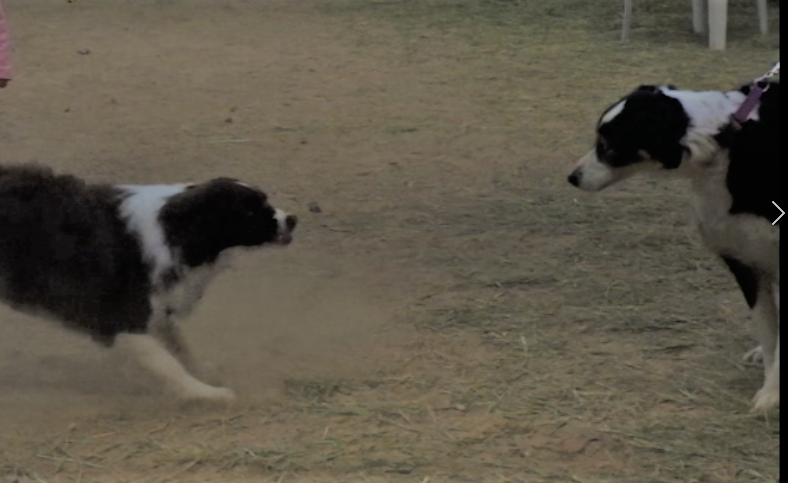 I’ve consulted on a lot of dog-to-dog aggression in the household. Typically, this problem doesn’t appear immediately, but builds over time. What that means is that two dogs seem fine; then one day, one dog attacks the other. Most dog owners believe the situation came from nowhere. However, there are several behavior issues, which when not corrected, can precede this kind of a problem.
I have more than one approach for dealing with problems of dog-to-dog aggression in a household. Which approach I use depends on several factors, some of which may include the dog’s personality. This knowledge helps me determine which training is needed to correct the contributing behavior issues. It is not unusual for this problem to have deep roots and this must be taken into consideration when it comes to the training needed to change behaviors in the dog that led up to an attack.
One personality I don’t contribute this problem to is that the dog is “alpha.” I recall a consultation with a foster who felt alpha status was behind an aggression issue in her home. The attacking dog was the foster’s personal dog. One of the newer foster dogs got into issues with her personal dog. What I had to say as far as the solution for this problem, was not what this dog fosterer wanted to hear. You see, up to this point, the foster felt that since her dog was alpha, that her dog could rule over and keep other dogs in their place. She felt that this was the correct way to have several dogs and would keep peace in the household.
Let’s take a moment to look at how this idea might apply in a human household. Let’s say that you have two children named Joey and Sam. Joey doesn’t like something that Sam did, so Joey slugs Sam resulting in a black eye. Do you say “Well, this is just the way it needs to be to keep the peace between my two boys? After all, Joey is the more alpha of the two.” I certainly would not allow my kids to sort things out in this manner. Instead, I’d teach them other ways to handle disagreements, including when to get me involved.
Ironically, although many dog owners refer to their dogs as their kids, those same owners fail to offer the same guidance to their dogs that they would their children when it comes to appropriate behavior. I believe it is the dog owner’s job to teach a dog what is acceptable and unacceptable behavior in the household. For example, my dogs learn they are not allowed to fight over possessions, or try and tell me I can’t pick up, or take away, any toy or food item.
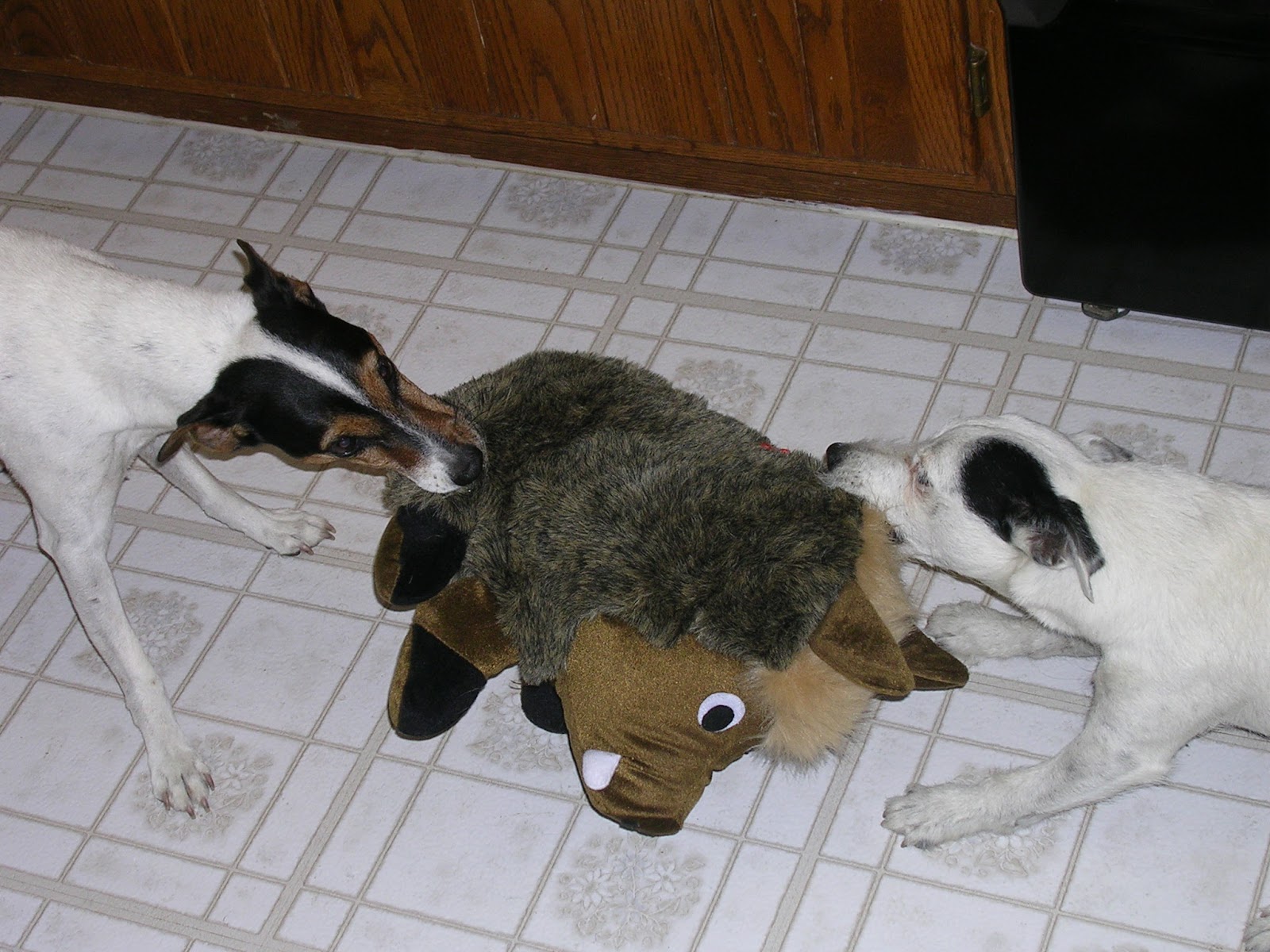
In regard to the foster who had issues with her dog attacking the new foster, I told her that her dog was the one in need of training, and not the new foster. Unfortunately, she didn’t take this very well. My explanation that she needed to set the rules for her dogs in regard to living amiably in the home fell on deaf ears. Her attitude was that she had fostered other dogs, and letting her “alpha” dog rule had worked just fine.
The “alpha” concept is not one I support when it comes to dog training and management. What I believe in is leadership training, where the dog learns that I control all of the resources, and that I make the rules for good behavior. I have found that training, using positive techniques and sometimes the Premack Principle, works to achieve my goals. I also believe in the LIMA principle. I don’t believe in using punishment for non-compliance or alpha rolls.
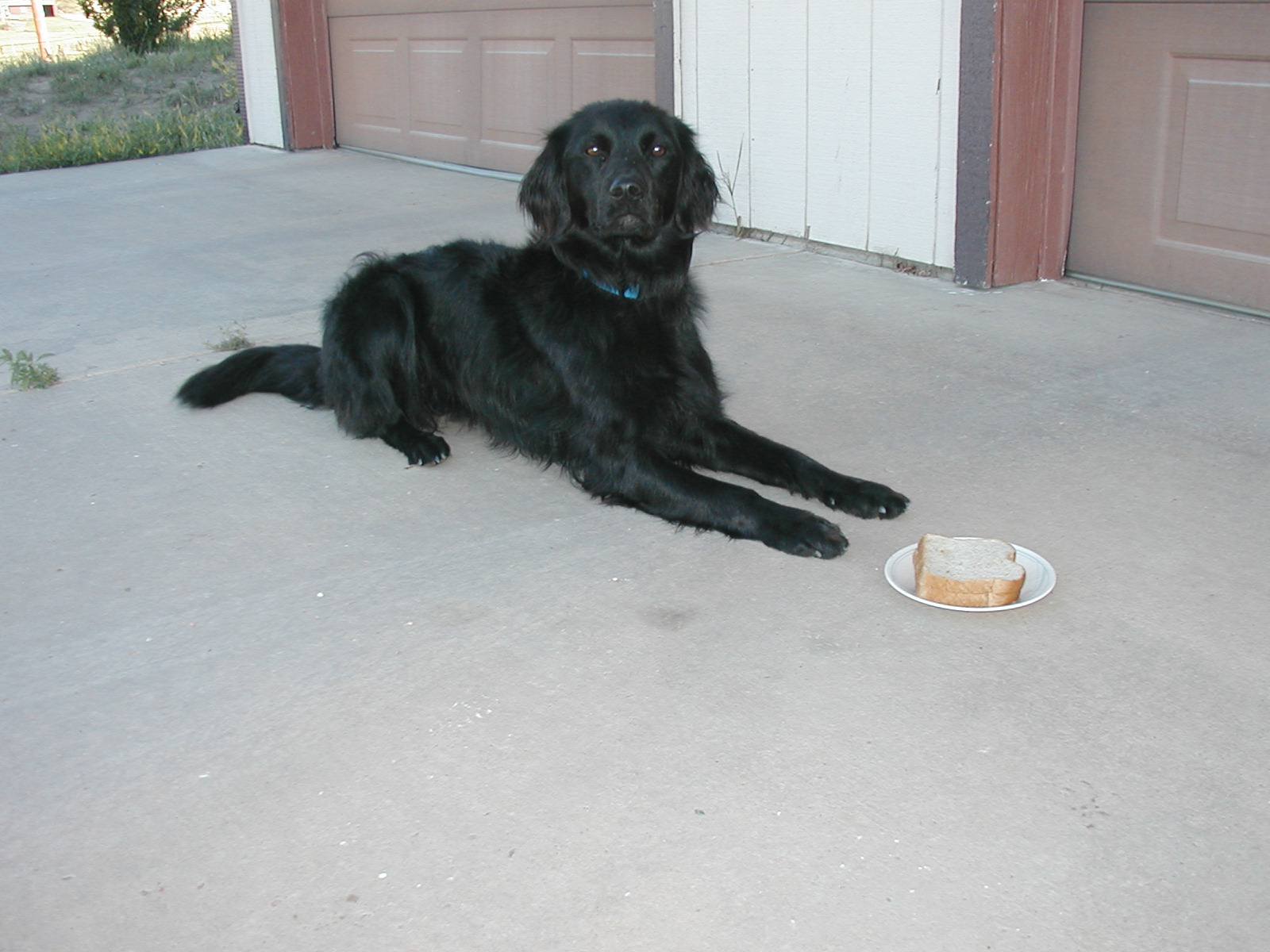
I realize that some people feel that since dogs were once wolves that a power hierarchy is significant. Unfortunately, over the years there has been more misunderstanding than clarity about how wolves work things out. For example, one misconception is that the alpha wolf always eats first. According to wolfpark.org “The alpha male does not always eat first. In fact, the hungriest wolf usually eats first. Even a low-ranking animal can defend food until it is done eating, and whoever wants the food most usually gets it. An exception to this is the omega wolf, a very low-ranking, ‘scapegoat’ wolf who lives on the fringes of the pack. Omega wolves usually eat last.”
What has also been observed with the animal who is low on the totem pole is that this animal often secures food by being sneaky. Ironically, I’ve seen some dogs, who are not low on the totem pole, resort to being sneaky to get something when the owner uses the “lord over the animal” approach or punishment rather than training to change unwanted behavior.
What may surprise some people about wolves is that they don’t always just work things out, thus avoiding injury to pack members. Many years ago, I interviewed a woman who owned a wolf rescue. In part of that interview, I learned that she had tried to keep a small pack of wolves on half an acre. That didn’t work. What this woman discovered was that wolves may not always work things out, and when they don’t there needs to be enough room for one wolf who is being pursued by another wolf to escape. The inability of the pursued wolf to not run far enough away resulted in the chased wolf getting badly injured.
The big white dog in this picture is part wolf. Ironically, he is tolerating this teenage Jack Russell’s misbehavior rather well.
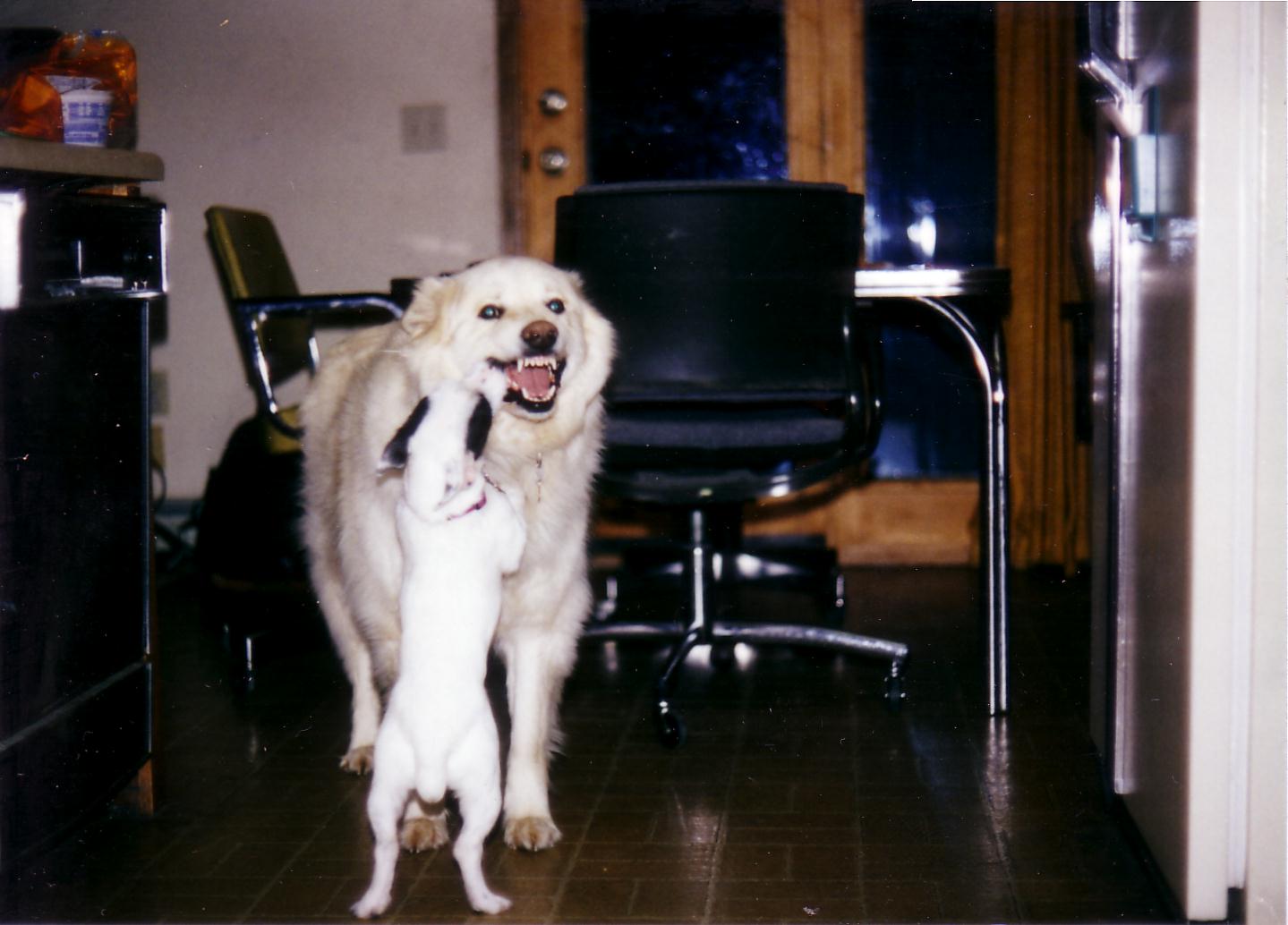
What the wolf rescue learned was that it took more acreage than they had for a wolf pack to set up their correct interactions which can keep one from being brutally injured. The rescue found that they could not keep more than two compatible wolves in half an acre. The lesson I took away from the interview was for people planning on keeping several dogs in a home, and who expect the dogs to work things out, they need a house larger than half an acre. Since few of us have that sized home, training is the alternative.
With some dogs you may find doing leadership training will solve a lot of aggression issues, but with other dogs more specialized training is needed. That is because with some dogs, their personality, and sometimes their previous handling or lack of correct handling has created that need for specialized training. For that reason, you will find scattered throughout my “Lessons in Fear and Aggression” courses several case studies with different techniques, or modifications of one or more techniques, which show how a particular issue was solved. In my next post, I will talk about a dog whose unique personality required extra training needs. Although this dog had submissive peeing issues, she would also resource guard and had tried to attach other dogs in the household.
Resources
My award nominated DVD: Separation Anxiety, a Weekend Technique, is available to “view for free” during the month of March, 2020.
Here is the link: https://e-trainingfordogs.com/canine-problem-behaviors-peggy-swager-courses/
a test
Clicker Train Your Own Assistance Dog
 Purpose: To help you learn how to clicker train your own assistance dog.
About this Course: There is no single cloak to be woven from the many threads in this train your own assistance dog course. It does not focus on demonstrating completed or polished tasks. Rather, the focus is on the ingredients – the behaviors the dog must know in order to construct tasks, lots of tasks. Assistance dogs serve individuals with such diverse disabilities that no single educational tool could encompass all the steps for creating finished assistance dog tasks – to serve the full range of disabilities. The specific tasks often need careful tailoring to individual teams, and differ with variables like the relative size of dog to the handler.
Instructor: Barbara Handelman, M.Ed, CDBC
Access: Once you purchase the course, you can begin watching the video modules immediately and as many times as you want. You will have access forever.
Prerequisites:
- The trainer should have a working familiarity with clicker training basics and the essential tenets of canine learning theory.
- The dog should have the essential “obedience” skills such as: sit, down, stay, and come, as well as being both comfortable and safe working off lead. All of these behaviors should be on cue, before attempting to train the complex skills that will later become the foundation of assistance dog tasks.
Content of the Course:
Verbatim scripts for the entire program are included in the handouts. This will facilitate accessibility for people who are deaf. People who are blind my have the pdf files translated into Braille.
You will learn –
- Clicker Training
- Hand targeting
- Shaping
- The “Four D’s”
- Teaching a dog to “touch”
- Teaching a dog to “push” with her nose and paw
- Position changes such as:
- Backing up
- Paws up
- Under
- Circle Behind
- Changing sides
- Follow
- Turn around
- Going away
- 360 degree turns in place
- Pulling off clothing
- Solid “Stand Stay”
- Targeting and Retrieve
- Shaping a retrieve
- Retrieving “mine”
- Retrieving item by name
- Behavior chain: Find Keys
- Scent discrimination
- Signaling on a found object
- Self-Control Exercises
- Going to remote targets
- Shaping to push buttons, switches
- Push to close a door
- Working with handicapped access doors
- Pulling to open a door
- Vans and car doors
- Waiting at doors and gates
- Ringing to “go out”
- Temperament evaluations for assistance dog skills
CEU Status:
7 CCPDT (CPDT-KA hours)
7 PPAB/PPG
ABCDT-L2 – 7 CEUs
ABCDT-L2 – 7 CEUs
Course Length: Seven video modules.
Course Cost – $175.00 USD

Student Information:
You must also read and agree to the E-Training for Dogs, Inc. Standard Terms and Conditions prior to taking a course: Click HERE to read these. You will be asked when you register if you have read them and will not be allowed to take the course if you do not agree to the terms.