e-Training for Dogs

Online Dog Training Class | Puppy Dog Training Online | Search and Rescue Dog Training

  • Home
  • About
    • History of e-Training
    • Faculty
    • Guest Lecturers
    • Students
  • Online Learning
    • For the Dog Professional
      • Canine Professional Programs
      • Individual Courses for Professionals A-Z
      • Individual Courses for Professionals-By Interest
      • Lecture Series
        • Ethology and Canine Behavior Lecture Series
        • Service Dog Training Lecture Series
      • CCPDT CEU Approved Courses
      • IAABC CEU Approved Courses
      • NADOI Accredited Courses for CEUs
    • For the Dog Enthusiast
      • Individual Courses A to Z for the Dog Enthusiast
      • Individual Courses by Interest for the Dog Enthusiast
    • Pet-Sitting Courses
    • Animal Wellness and Animal Hospice
    • Veterinary Professional Courses
    • Equine Enthusiasts Online Courses
  • FAQ
  • Blog
  • Contact
  • Links
You are here: Home / Archives for Past Lectures

Wolves Dogs and Humans – the Old Triangle: Science and Training at the Wolf Science Center/Austria

January 15, 2021 By Cheryl Aguiar |

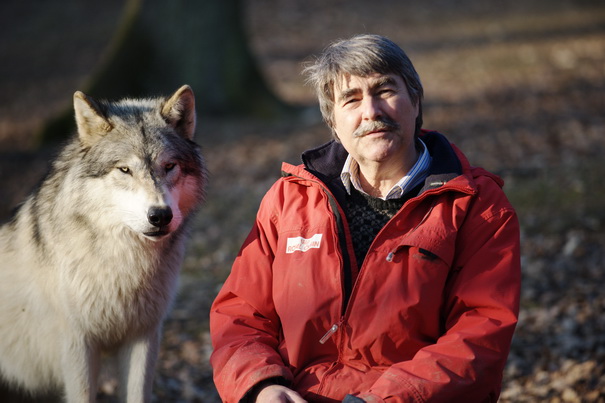
KurtKorschalSpeaker: Kurt M. Kotrschal, PhD

Description: Wolves Dogs and Humans…Why did particularly wolves in their domesticated form turn into the closest animal buddy of man? Wolves and human are both hypercursorial hunters, adaptable to a wide range of environments and show a similar social orientation: both species cooperate over hunting, caring for offspring and in warfare against neighbours. At the Wolf Science Center (Austria) (www.wolfscience.at) we experimentally investigate and compare the cognitive abilities of wolves and dogs and their cooperative orientation among themselves and with humans. A number of hypotheses imply that by domestication, dogs have become intrinsically better than wolves in interacting and cooperating with humans (Frank 1980, Hare and Tomasello 2005, Hare et al. 2012, Gacsi et al. 2009). However, this may not be true, as wolves are much more dependent on fine-grained social interactions with pack members than dogs, which may also be expressed in their interactions with humans when properly socialized with them. For example, Range and Viranyi (2013) found that wolves are more attentive imitators with conspecific models than dogs (see also Udell et al. 2008).
Our data indicate that domestication did not simply increase the inherent disposition of dogs to synchronize and coordinate with humans, or
that dogs would outperform wolves in their more “human-like” cognitive skills or in their better attentiveness towards humans and their action inhibition, as proposed by previous domestication hypotheses (Hare et al. 2012, Gacsi et al. 2009). Rather, the “intraspecific canine cooperation hypothesis” (Range and Viranyi 2013) is supported. In my talk I will give an introduction to the work and training philosophy at the WSC and provide a few examples of our science.

This wolves dogs and humans lecture will be recorded live online March 2014. You may attend Live or OnDemand…or both. CEUs available for both.
Available as a recording after the lecture.

Cost: $25.00

add-to-cart-8


CEU’s Available:
2 IAABC CEU’s
2 CCPDT CEU’s
2 ABCDT-L2 CEU’s
2 NADOI CEU’s
2 PPAB/PPG

Members of APDT, CCPDT, IAABC, ABCDT-L2 or NADOI receive over 25% off. All Lecture Series Webinars are only $18.00 each. See instructions below on how to find the password to take part in this professional discount.

IAABC members, Click HERE to apply your discount.
Email cheryl@e-trainingfordogs for the passcode.

NADOI, CCPDT, ABCDT-L2, PPG, IACP and APDT members, click HERE to apply for your discount.
Email cheryl@e-trainingfordogs for the passcode.
Filed Under: Past Lectures |

Resource Guarding in Dogs

January 15, 2021 By Cheryl Aguiar |

Resource guarding in dogsWorking with Dogs who Guard Food and Other Resources

Resource Guarding in Dogs

Speaker: Trish McMillan Loehr, MSc, CDBC, CPDT-KA

Available as a recording.


Guarding valued resources is a natural behavior for many animals in the wild. However, when dogs guard their food, toys and chews from the humans they share their lives with, it can be a very serious problem. Food guarding is a common reason for euthanasia of shelter dogs, although this behavior problem can often be improved in a shelter setting with some very simple protocols. This presentation will look at a variety of different, positive-reinforcement based methods to manage and work with resource guarding in dogs.

Trish McMillan Loehr, MSc, CDBC, CPDT-KA will discuss techniques for managing and reducing aggression in dogs who growl, snarl, snap or bite when humans approach them while they’€™re eating, chewing or playing with a toy. This webinar will teach you how to work with resource guarding in dogs using positive reinforcement, management and desensitization/ counterconditioning techniques.  A basic knowledge of learning theory is helpful but not necessary.

What you can expect to learn in this course for resource guarding in dogs:

  • Techniques for managing and reducing aggression
  • Desensitization and counter-conditioning techniques
  • Training techniques

Available  recorded (“OnDemand”).

Cost: $25.00
add-to-cart-8


CEU’s Available:
2 IAABC CEU’s
2 CCPDT CEU’s
2 ABCDT-L2 CEU’s
2 NADOI CEU’s
2 PPAB/PPG

Members of APDT, CCPDT, IAABC, ABCDT-L2 or NADOI receive over 25% off. All Lecture Series Webinars are only $18.00 each. See instructions below on how to find the password to take part in this professional discount.

IAABC members, Click HERE to apply your discount.
Email cheryl@e-trainingfordogs for the passcode.

NADOI, CCPDT, ABCDT-L2, PPG, IACP and APDT members, click HERE to apply for your discount.
Email cheryl@e-trainingfordogs for the passcode.

Filed Under: Past Lectures |

Windows of opportunity: A New Look at Canine Socialization

January 14, 2021 By Cheryl Aguiar |

Socializing PuppiesSocializing Puppies

Veterinarians and trainers often recommend “socialization” to owners of young puppies as part of standard education and care. Most recommendations are focused on exposing the puppies to a variety of stimuli including children, novel objects and body handling. It is important to recognize that socialization outcomes are affected by more than just these experiences. Long term socialization and adult behavior patterns can be affected by genetic influences as well as by specific experiences during multiple developmental stages including the prenatal, neonatal and early socialization periods.   Current research and recommendations will be discussed.

Speaker: Christopher Pachel, DVM, DACVB

Available as a recording.

This course will address the potential effects of, and research regarding:

  • Prenatal care on adult behavior
  • Neonatal handling on adult behavior
  • Genetics and socialization on adult behavior
  • Appropriate and inappropriate interactions during the primary socialization period
  • The impact of socialization and ongoing learning in adult dogs

Cost: $25.00

add-to-cart-8


CEU’s Available:
2 IAABC CEU’s
2 CCPDT CEU’s
2 ABCDT-L2 CEU’s
2 NADOI CEU’s
2 PPAB/PPG CEU’s
2 IACP CEU’s

Members of APDT, CCPDT, IAABC, IACP, ABCDT-L2 or NADOI receive over 25% off.All Lecture Series Webinars are only $18.00 each. See instructions below on how to find the password to take part in this professional discount.

IAABC members, Click HERE to apply your discount.
Email cheryl@e-trainingfordogs for the passcode.

NADOI, CCPDT, ABCDT-L2, PPG, IACP and APDT members, click HERE to apply for your discount.
Email cheryl@e-trainingfordogs for the passcode.

Filed Under: Dog Behavior, Dog Health and Wellness, Past Lectures |

The Development of Behavior in Dogs (Canis lupus familiaris) and Wolves (Canis lupus lupus)-Ethology and Canine Behavior Lecture

January 10, 2021 By Cheryl Aguiar |

Speaker: Kathryn Lord, Ph.D.

Description: While many dog trainers use similarities between dogs and wolves to inform their training and handling techniques, it is their differences that teach us the most. This talk will be focused on my research investigating early behavioral differences between dogs and wolves, and how these differences effect later adult behavior and training.

Excerpt-

Sensory systems of dogs and wolves develop at the same time.
•The critical period in wolves occurs two weeks earlier than in dogs
•Dogs and wolves have a four week long critical period of socialization
•However, wolves critical period is interrupted by the development of the senses

Cost: $25.00


CEU’s Available:
2 IAABC CEU’s
2 CCPDT CEU’s (2 CBCC-KA or 2 CPDT-KA)
2 ABCDT-L2 CEU’s
2 NADOI CEU’s
2 PPAB/PPG

Professional Member Discounts

DiscountsMembers of APDT, CCPDT, IAABC, ABCDT-L2 or NADOI receive over 25% off. All Lecture Series Webinars are only $18.00 each. You must email me for the Code for your discount: cheryl@e-trainingfordogs.com (Please also include your CPDT or CBCC Certificant number in the email if you are a CCPDT Certificant).

IAABC members, Click HERE to apply your discount.
Email cheryl@e-trainingfordogs for the passcode.

NADOI, CCPDT, ABCDT-L2, PPG, IACP and APDT members, click HERE to apply for your discount.
Email cheryl@e-trainingfordogs for the passcode.

Filed Under: Past Lectures |

Training a Cat Isn’t Like Training a Dog! Or is it?

January 9, 2021 By Cheryl Aguiar |

kittenTraining a Cat

Speaker: Jacqueline Munera, CCBC, PCBC, CAP2

Available as a recording.

Many behavior professionals hold on to an assumption that, while cats can be trained, they are much more difficult than dogs, perhaps because they are perceived as less social and therefore less responsive to humans than dogs.  The reality is more complex than our constructs allow about what the proto-typical cat or dog is like because many elements impact an individual’s behavior.  While learning and behavior science concepts are relatively consistent between species, a basic understanding of domestic cat ethology is necessary to successfully apply those concepts during a behavior modification or training program. We will use photos and videos in this presentation to cover some basic ethology and behavior of domestic cats, along with various solutions to typical challenges that may come up during training sessions.  You will learn that training a cat is not exactly the same as training a dog, but neither is it completely different!

Cost: $25.00

Solving Separation Anxiety


CEU’s Available:
2 IAABC CEU’s
2 CCPDT CEU’s
2 ABCDT-L2 CEU’s
2 NADOI CEU’s
2 PPAB/PPG

Members of APDT, CCPDT, IAABC, ABCDT-L2 or NADOI receive over 25% off. All Lecture Series Webinars are only $18.00 each. See instructions below on how to find the password to take part in this professional discount.

IAABC members, Click HERE to apply your discount.
Email cheryl@e-trainingfordogs for the passcode.

NADOI, CCPDT, ABCDT-L2, PPG, IACP and APDT members, click HERE to apply for your discount.
Email cheryl@e-trainingfordogs for the passcode.

Filed Under: Lecture Series, Past Lectures |

  • 1
  • 2
  • 3
  • …
  • 11
  • Next Page »

Search this site:

SIgn up for our Newsletter

Sign up for our newsletter: Sign up for our newsletter

Follow Us

  • Facebook
  • LinkedIn
  • RSS
  • Twitter
  • YouTube

Link to Discounted Courses for Professionals

Link to Discounted Courses for Professionals

Link to Classroom For Current Students

Link to classroom: Student Classroom Link This link will work for current and registered students ONLY.

Lecture Series

Seeing Through a Dog's Nose-Canine Nose Lecture Series ALSO, Please check out our ethology and canine behavior lecture series, over 100 lectures Ethology and Canine Behavior Lecture Library Also available is our lecture series: Service Dog Training Lecture Series

What is E-Training for Dogs and how does it work?

What’s NEW?

Backing and Pivoting

Five Unique and Awesome Tricks!

Out of Control Dogs

CBCC-KA Exam Study Courses Packages

CCPDT CPDT-KSA Courses for Continuing Education

Pay Later Now Available

What’s NEW?

Backing and Pivoting

Five Unique and Awesome Tricks!

Out of Control Dogs

CBCC-KA Exam Study Courses Packages

CCPDT CPDT-KSA Courses for Continuing Education

Copyright © 2025 e-Training for Dogs | Privacy Policy