By Chris Redenbach CDBC, CBCC-KA
For years I’ve been telling people that different dogs need different
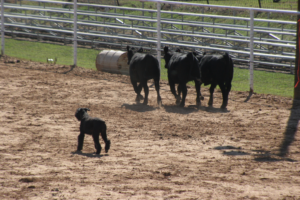
approaches to their training and enrichment. This is a species of unparalleled variation in both behavior and morphology. But they are almost all of human design. When we look at truly wild dog populations around the world, they tend to be medium size animals with generally brown or white coats, prick ears and moderate angulation. They are, like wild animals everywhere, adapted for a niche where they make their livings from predation, scavenging and eating treats such as berries when available. Their environment dictates their morphology and behavior as it does wolves or any other wild animal up against considerable odds for survival and reproduction (inclusive fitness).

By contrast, the domesticated dog has become a marvel of selective breeding, setting traits for many hundreds of generations, to aid humans in so many extremely different roles. Studies reveal significant differences in innate behavior sequences and the morphological differences are glaringly obvious. It is not hard to think of this as a human guided evolution of sorts. Species differentiation can be quite rapid. A marvelous illustration of this phenomenon is the differentiation of the anole lizard of the Caribbean in nature and in an eye-opening experiment carried out by biologists. You can see the videos about anole speciation at the links below. The point for this article is that speciation occurred based on the requirements of differing habitat and prey. And the morphological and behavioral changes were well established in as short a time as two years. The anole species adapted for tree living (long legs and thick textured toe pads for gripping big branches) placed on a small island devoid of trees, quickly developed shorter legs and different toe pads adapted for living and hunting in bushes. Just two years!
So it was no surprise, but rather a joyous holiday celebration, when Dr Erin

Hecht of Harvard, published her study of brain scans of different breeds, demonstrating that brains of different breeds have, at least in some cases, changed the brain itself, adapting to the new specializations that selective breeding has brought¹ ². I hope that this finally leads us in the right direction of understanding our dogs better. The phrase “a dog is a dog is a dog” is not now and never was true. We are the lucky guardians of a genetic diversity that deserves understanding and protection.
For more about the rapid evolution/adaptation of anoles, see these two videos: Adapting Anoles https://www.youtube.com/watch?v=D0kDf_ozVd4 and Islands in Evolution: Anoles https://www.youtube.com/watch?v=0Vlx8fSqYVE
¹ Erin E. Hecht, Jeroen B. Smaers, William D. Dunn, Marc Kent, Todd M. Preuss and David A. Gutman, Journal of Neuroscience 25 September 2019, 39 (39) 7748 7758; DOI: https://doi.org/10.1523/JNEUROSCI.0303-19.2019
² Hecht, E. et al, 2019. Significant Neuroanatomical Variation Among Domestic Dog Breeds, Journal of Neuroscience 25 September 2019, 39 (39) 7748-7758; DOI: https://doi.org/10.1523/JNEUROSCI.0303-19.2019
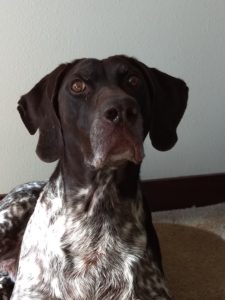 named Honor. She had ligament surgery 4 years ago. She recently started moaning when she would get up or down…every single time. She was also VERY weak in her hind legs and was using them less and less. This got increasingly worse over a few months. I did not want to put her on a daily dose of some pharmaceutic drug, so thought I would research CBD as I had heard so much about it. I found HempWorx through some very good friends of mine and started her on the cookies at night and the oil in the morning. The change was almost IMMEDIATE and is SO HUGE I can not tell you. I have not heard her moan in weeks. She actually jumps up on me again…and her back legs are holding her! She is losing weight because she is more active. It has been a miracle for her.

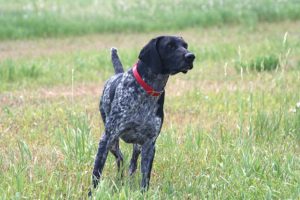 noticed that Strike’s back left foot looked very different from the rest of his feet and he was walking and running like he was being bothered by it. I took him to the veterinarian for his diagnosis. My dog had ligaments that were torn away from his bones, in that foot. The vet prescribed a drug that I gave him twice a day for pain and inflammation… with very little improvement. Then, I was introduced to Hempworx CBD Dog Treats. I started him on these treats once a day, and within a few days, I noticed marked improvement in his motion. I give him these treats once a day. I am very happy with what I see as marked improvement in him. He will get these treats for the rest of his life. I love this product. Lynn Erickson”





 Dawn Scheu is a Professional Service Dog Trainer and owner of Willow Service Dogs L.L.C. Dawn began training dogs in 1998 when she joined a Search and Rescue team and began training her first working dogs in the areas of Urban, Wilderness and Tracking/Trailing. It was after Dawn was diagnosed with a normally fatal form of Celiac disease that she trained the first gluten detection dog in the United States to save her own life. Dawn was the first trainer to implement a controlled search to allergen detection training of any kind, utilizing both an indication and an all clear behavior with her personal service dog Willow. She wrote the original Gluten and Allergen Detection Standards that have been used by service dog trainers nationally. Dawn also has trained dogs for other allergen detection and medical alerts including: seizure, diabetes, POTS, and mast cell activation disorder. Dawn is a founding member and President of O.D.O.R. Service Dogs Inc., an educational nonprofit organization dedicated to ensuring scent detection service dogs are trained to the highest standards and demonstrate reliability. She holds several professional memberships with her educational focus in animal behavior. She is also a APDT C.L.A.S.S. Evaluator/Instructor and an O.D.O.R Evaluator.