e-Training for Dogs is honoured to have the involvement of the following Guest Lecturers.
 Charles Berger DVM
Charles Berger is a graduate of Cornell Veterinary College and was the owner and medical director of Campus Veterinary Clinic in Berkeley, California for 35 years. He was the veterinarian, as well as served on the Board of Directors, of the institute that oversaw the largest collection of captive wolves. He also served on the Board of Directors of the International Sled Dog Veterinary Medical Association and has been the veterinarian for over 30 mid and long distance sled dog races, including many Iditarods and Yukon Quests. This seminar on “Of Wolves and Dogs” was taught in the spring of 2007 and in 2009 at Dartmouth College through the Ilead program, emphasizing the ‘big picture’ of evolution, domestication and canine biology. For more information on Charles Berger go to www.ofwolvesanddogs.com
 Nicole R. Dorey, Ph.D.
As a graduate student at the University of North Texas, Nicole became interested in animal training and specifically decreasing problem behavior in animals. One of her first endeavors was an olive baboon that was engaging in self injurious behavior which caused huge lacerations on its arms and legs. With Nicole’s knowledge of behavior analysis, her first thought was to see what was maintaining the baboon’s problem behavior and to conduct a functional analysis. From the data collected with this method, she was able to eliminate the self injurious behavior and found that the cause of the problem was the keepers telling the baboon to “stop doing that” that was acting as attention and increasing the self injurious behavior. This was the first time this method had been used with an animal and has since been used to determine the maintaining variable of self injurious behavior in other captive primate species. After this project, Nicole was hooked. Although her Ph.D. at the University of Exeter was focused on investigating social learning in a variety of zoo animals and dogs, in her spare time she consulted on training and decreasing problem behavior at the Paignton Zoo and successfully co-organized a zoo training workshop. After her Ph.D. she moved to Florida and began working as a postdoctoral fellow, where she has published a number of papers and book chapters on canine social cognition and behavior. Her recent research focuses on developing a line of research that will serve the dog training community and seek to find a deeper understanding of the factors that underlie problem behavior. In addition to conducting her research, Nicole is also a board member for the Animal Behavior Management Alliance (ABMA) and is a lecturer at the University of Florida teaching a variety of courses including Animal Cognition and Research Methods. She has also been an invited speaker to a number of national and international conferences and workshops, including Karen Pryor’s Clicker Expo and APDT. Her work has been featured in the media including Discovery News among others. She believes that her research will provide dog trainers with a more informed way of choosing training methods by providing research based information on which methods work best for certain behaviors.
 Rachel Friedman MSW LISW
Rachel Friedman is a pet trainer/behaviorist, licensed independent social worker and owner/president of A Better Pet LLC. Ms. Friedman has merged her passions into a company that provides a broad based training/behavioral consult service for owners and their companion and/or working animals. She focuses her efforts on teaching people of all ages and abilities how to communicate and effectively relate to their dogs and cats using positive, non-force based methods. She has a subspecialty in training autism assistance dogs for children. In addition to her training services, she is the proud inventor of Har-Vest, a 3-in-1 backpack for dogs.
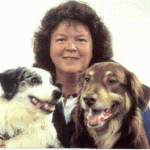 Dee Ganley CBCC-KA CPDT-KA CABC
Dee is the author of “Changing People, Changing Dogs” is a skilled dog trainer, handler and instructor having 30+ years experience in the field of dog training. Dee specializes in difficult dogs and has been very successful as a canine behavior consultant in the New England area recommended by veterinarians, past clients and colleagues. Dee has recently been traveling and giving workshops and lectures in North America and Europe helping trainers, handlers and shelter folks help their four footed friends.
 Barbara Handelman M.Ed., CDBC
Barbara has been a Licensed Clinical Mental Health Counselor for over forty years. She was awarded a Master’s degree, in Special Education for Emotionally Disturbed Children, from Boston University, in 1974. Early in her career, her work focused on relationship therapy with non-verbal children. In that context, Handelman became a skilled observer of human body language. Studying the ways dogs and horses use their bodies to communicate became a natural extension of her work with children. She was a founding member of the International Association of Animal Behavior Consultants (IAABC), and is a certified dog behavior consultant (CDBC) through that organization. She is also serves as the Horse Division Chairperson for IAABC. Barbara has taught college level courses at the University of Maine, in Orono, Maine, and at the University of New Hampshire’s School of Lifelong Learning, in Lebanon, NH. She has been teaching on-line courses for E—Training for Dogs since 2009. Those courses focused on child development, family dynamics, and crisis intervention. Barbara is the author of the critically acclaimed book “Canine Behavior: A Photo-Illustrated Handbook. She is currently working on a book and other projects related to equine behavior and clicker training for horses. She has presented talks on both dog and horse behavior at the IAABC conferences in 2009 and 2011. For the last twenty years Handelman has had a second career as a professional photographer, using her camera to capture the moods and movements of people, horses, and dogs. Many of her own photographs are included in her book, and her course curricula.
 Lore I. Haug DVM MS DACVB CPDT-KA CABC
Dr. Haug graduated summa cum laude from Texas A&M College of Veterinary Medicine in 1993. She completed a one year internship in small animal medicine and surgery at Louisiana State University School of Veterinary Medicine. In 2002, she completed a Master’s Degree and residency program in animal behavior at Texas A&M College of Veterinary Medicine. Dr. Haug is one of only 52 veterinarians certified by the American College of Veterinary Behaviorists – ACVB diplomats are the only true specialists in veterinary behavior. In addition, she has a Master’s Degree, is a certified professional dog trainer through the Certification Council for Professional Dog Trainers, and is a Certified Animal Behavior Consultant through the International Association of Animal Behavior Consultants. Currently, her practice focuses entirely on working with clients on prevention and solutions for behavior issues. These may range from minor nuisances to serious, life-threatening problems in a variety of species including dogs, cats, horses, birds, and exotics. Dr. Haug is also an active speaker, giving educational seminars for clubs, veterinary clinics, and various local and national animal-related organizations. She is frequently interviewed for local and national magazines, radio and television shows.
 Julie Hecht MSc
Julie has traveled the globe studying animal behavior and focusing on the dog-human relationship. She began her studies at the University of Wisconsin-Madison under the tutelage of Dr. Patricia McConnell and Dr. Charles Snowdon. She crossed the pond and received a Masters degree from the University of Edinburgh in Applied Animal Behaviour and Animal Welfare. Her dissertation research on “guilty” behavior in dogs was supervised by Dr. Márta Gácsi and Dr. Ádám Miklósi at the Family Dog Project, Eötvös Loránd University in Budapest, Hungary. She is now quite acquainted with Hungarian breeds! Julie is a public speaker who shares scientific research into dogs and their complex relationships with humans www.DogSpies.com. She blogs and holds interactive programs for dog-training groups, student groups and the general public. Julie is the Lab Manager at Dr. Alexandra Horowitz’s Dog Cognition Lab at Barnard College in New York City. They hold treat-based, behavioral studies in natural settings to explore the dog’s perspective. To learn about or participate in their current research, visit www.DogCognition.com.
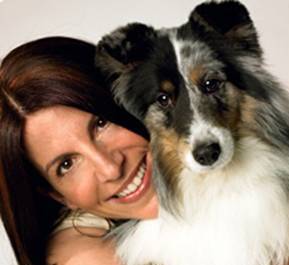 Sarah Kalnajs CDBC CPDT ABMA APDT IAABC IAACAB
Sarah has over ten years experience working in canine behavior, training, and research. She is the owner of Blue Dog Training & Behavior in Madison, Wisconsin www.bluedogtraining.com. She is one of the editors of the peer-reviewed “Dog Trainers Journal” , and is a member of the advisory board and faculty of Cynology College specializing in the areas of shelter and rescue behavior, evaluation, and modification in shelter settings. Sarah is an honors graduate of the University of Wisconsin – Madison and has completed post-graduate work at Edgewood College and through the Kewalo Basin Marine Mammal Research Lab at the University of Hawaii. She is one of the first international students to complete the Canine Behavior Program conducted through the Etologisk Institut under the mentorship of Dr. Roger Abrantes in Denmark. In addition to her private practice, Ms. Kalnajs is president of Wisconsin American Eskimo Rescue, Manager of Behavior and Training Programs at Lakeland Animal Welfare Society and political liaison for the Wisconsin Dog Rescue Coalition. Sarah is the producer of the popular and highly praised DVD series, “Language of Dogs” and “Am I Safe”.
 Erich Klinghammer Ph.D
Dr. Erich Klinghammer is the founder and director of Wolf Park. He is an ethologist, and began his work with wolves in order to study their behavior. Dr. Klinghammer regards wolves as sensitive indicators of the well-being of the ecosystem of which they are a part. He established Wolf Park to conduct long term, in-depth studies of wolf behavior. This research augments ecologists’ field studies of wild wolves. Dr. Klinghammer holds a Ph.D. from the University of Chicago, and is a member of the Animal Behavior Society, the American Association of Zoological Parks and Aquariums and several other professional organizations. Dr. Klinghammer came to Indiana to join the faculty at Purdue University where he taught ethology, applied ethology, animal behavior and psychology. Since retiring from Purdue in 1995 he now holds the position of professor emeritus. He is the director of the Institute of Ethology at Wolf Park, which oversees the research conducted here. A lifelong interest in dogs led Dr. Klinghammer to breed and train German Shepherd dogs in the past. He is still a member of the Verein f. Schaeferhunde (SV). Presently he owns three Chihuahuas. Dr. Klinghammer also has a special interest in aggressive behavior problems of dogs, captive wolves and dog-wolf hybrids. He has served as a behavior consultant to attorneys, and has testified in court cases. For several years he was involved in the training program for animal control officers in Louisville, Kentucky. Dr. Klinghammer resides at Wolf Park with his wife Peggy, and participates in some of the daily programs and seminars that take place at the Park. He enjoys now when visitors come to the Park that were here as children, and who now are bringing their own children to this special place to learn about wolves and nature.
 Kathryn Lord Ph.D.
Kathryn received her Ph.D. from the University of Massachusetts, where she studied the evolution and development of behavior, with Dr. Raymond Coppinger. Kathryn has served as adjunct faculty at Hampshire College, in Amherst MA, teaching courses in animal behavior, evolution, and dog behavior. She has also given lectures and workshops internationally including the Chienposium, Quebec, Canada; University of Pisa, Pisa, Italy; and Schweizerische Tierärztliche für Verhaltensmedizin, Bern, Switzerland. Kathryn is currently working on several new projects investigating how the evolution and development of behavior can help to inform our management of village and shelter dogs.
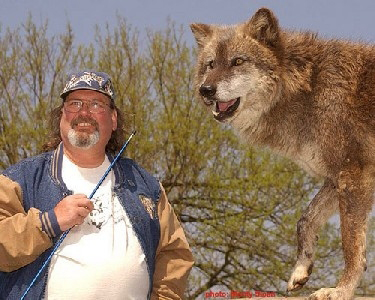 Ken McCort
Ken McCort owns and operates “Four Paws” training center in Doylestown, Ohio www.kenmccort.com. Along with his wife, Marilyn, a veterinarian, he lives with 9 dogs, 8 cats, 6 large birds, some finches, 2 mini horses, a goat, a pony and a donkey. In his profession, he works with animals with behavioral concerns. Most clients and animals are acquired by referral from veterinarians or other clients. He has been training animals full time and on a one-on-one basis since 1986. Currently, he works with dogs, cats, birds and llamas. In addition to his business, Ken is a certified evaluator and evaluator instructor with the Delta Society’s Pet Partner program. Not only does he evaluate and certify animal/handler teams to visit in hospitals, nursing homes and many other areas, but he helped to develop the Pet Partner Skills and Aptitude Test and teaches it both nationally and internationally. Ken has taught courses on animal behavior at the University of Akron (Ohio), Columbus State University, the Ohio State University College of Veterinary Medicine, the Midwest Veterinary Conference, the Society of Anthrozoologists, the Delta Society, Tuft’s University Animal Exposition, and many other animal related groups. Ken has also been going to Japan since 2004 to teach trainers how to better understand animal behavior. In addition, Wolf Park in Battleground, Indiana, which is a research facility that studies wolf behavior, utilizes Ken for some its presentations and research projects, and has been allowing him to train with their wolves for many years.
 Holly Miller
Holly is a researcher at the University of Valenciennes (France) who studies self-control in humans and dogs. As a graduate student at the University of Kentucky, Holly helped develop the Canine Cognition Lab and Science Dog Daycare at the University of Kentucky. There she conducted research demonstrating that an initial act of self-control by dogs can have a negative affect on subsequent cognitive behavior. Following a 10-min sit stay dogs remember less accurately on a search task, persist for a shorter duration on a puzzle task, and are more likely to approach a threatening, aggressive dog. Her research also found that glucose (but not a calorie-free placebo) eliminates deficits caused by initial self-control exertion. Holly has presented her research at national and international conferences and her work has been featured in The Scientific American Mind, Huffington Post, and the New York Times, among others. Holly hopes that her research will result in a greater understanding of canine self-control and impulsivity and lead to more effective training paradigms for impulsive, fearful, or aggressive dogs. In addition to her research, Holly is an experienced dog trainer and teacher. She owns a 7-year old Belgian Sheepdog named Edda and enjoys obedience, herding, and agility training.
 Monty Sloan
I have been photographing wolves since 1984 and have since collected many thousands of photographs. I photograph in both color and black and white. For color I use a local custom lab, Color Tech, here in Lafayette, Indiana. It’s privately owned and the people there are true experts in photography. For Black and White, I have my own darkroom. I use a Besler 45mx coldlight enlarger with Nikon lenses. I mostly work with fibre based museum quality papers such as Agfa’s Portriga, Arista and Ilford’s Gallerie. I use an archival process involving three fixer baths and an archival print washer which I allow to run twice the recommend washing time just to make sure the prints will outlast us all. My work at Wolf Park Wolf Park is a fantastic wildlife education and research facility in Indiana. I’ve worked here as a handler, educator, researcher and photographer since 1988. I also am webmaster of a number of web sites, including Wolf Park’s. Part of the proceeds from all my photography sales go to help Wolf Park and their education efforts. I have many web sites, but the best one to see my work, and what I have available for sale, is www.wolfphotography.com where I have quite the listing.
 Kellie Snider MS
Kelli is the manager of Animal Behavior Programs at the SPCA of Texas, a sheltering system in north Texas that includes two shelters, two wellness clinics and a Rescue and Investigations team. She has developed volunteer training and enrichment programs, designs and conducts trainings, evaluates individual animals in order to design life enhancing programs, and oversees the canine aggression intake assessment. Kellie earned BS and MS degrees in Behavior Analysis, and conducted research on canine aggression under the direction of Jesus Rosales-Ruiz at the University of North Texas. The research resulted in the development of the Constructional Aggression Treatment (CAT) procedures which are now used around the world for treating canine aggression. Snider and Rosales-Ruiz have travelled around the US and in Canada and the UK conducting seminars on CAT. A seminar of the procedure is available from Tawzer Dog Videos.
 Grisha Stewart MA CPDT
Grisha owns Ahimsa Dog Training in Seattle. She specializes in the treatment and prevention of dog aggression. Grisha has a Master’s in Mathematics from Bryn Mawr College. She is now pursuing a Master’s in Psychology with an emphasis in animal behavior at Antioch University, while still running her 6-trainer business and doing private consults for aggression cases. Her first career as a theoretical mathematician and college instructor serves her well in dog training and behavior consultations, because she relies heavily on the problem solving, critical thinking, and teaching skills she gained in that field. Since founding Ahimsa Dog Training in 2003, she has found her canine and human students to be much more excited about learning than her college students!
Canine behavior fascinates Grisha and she is highly motivated to help improve our techniques for rehabilitating and training dogs. This led her to develop BAT, Behavior Adjustment Training, which uses environmental consequences to reward the dog and eliminate problem behaviors. She has two DVDs on BAT: “Behavior Adjustment Training” and “Organic Socialization: BAT for Aggression and Fear in Dogs.” For more information on Grisha go to www.ahimsadogtraining.com
 Clive Wynne, Ph.D
Dr. Wynne is a Professor of Psychology, University of Florida, Gainesville, a Director of Research Wolf Park at Battle Ground, Indiana, Professor and International Scholar at Kyung Hee University Suwon, South Korea and Editor-in-Chief Behavioural Processes. Dr. Wynne is responsible for papers in behavior analysis, comparative cognition, & other branches of experimental psychology. Dr. Wynne is interested in the behavior of animals – including cognitive behavior. In recent years he has been concentrating on the behavior of dogs and other canids. For more about current research – and to volunteer your dog or yourself – please visit www.caninecognition.com